
Choosing the right hearing aid matters because it directly affects how clearly and comfortably a person can hear in daily life. Different types of hearing aids are designed for different levels of hearing loss and suit varied lifestyles. It depends on whether someone is active, works in noisy environments, or prefers simple, easy-to-use devices. Cosmetic options range from nearly invisible in-ear models to more powerful behind-the-ear devices. Since everyone’s hearing needs are unique, a professional hearing assessment is essential to choosing the right one.
Why Choosing the Right Hearing Aid is Important?
Choosing the right type of hearing aid improves speech clarity and makes everyday communication easier and more natural. The right device can ensure comfort, and lead to long-term use without irritation or fatigue. Hearing loss severity and lifestyle needs vary from person to person. Hence, selecting the right type of hearing aid will provide the best performance in different listening environments. Professional guidance from an audiologist is essential, as they assess hearing levels and recommend the most suitable solution for effective and lasting results.
Types of Hearing Aids
Behind-the-Ear (BTE) Hearing Aids
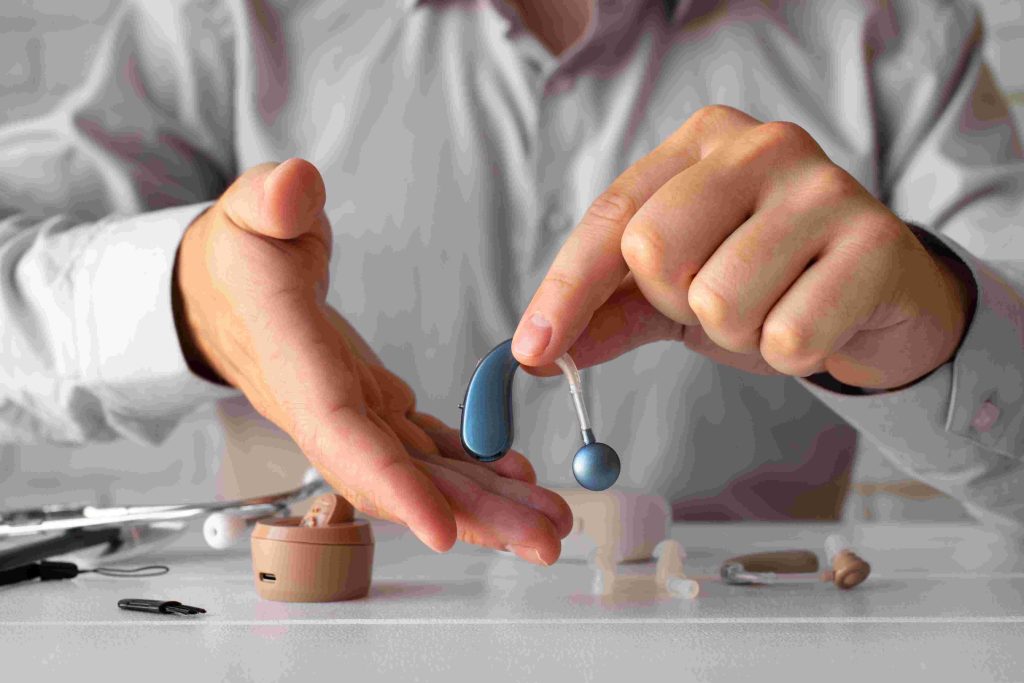
Behind-the-Ear hearing aids are worn behind the ear and connected to an earmould through tubing. They are suitable for a wide range of hearing loss, from mild to profound, and are known for their durability and ease of maintenance.
Best for: Children, seniors, and people who need powerful amplification.
Receiver-in-Canal (RIC) / Receiver-in-the-Ear (RITE)
These devices have a small unit behind the ear, with the receiver placed inside the ear canal. They offer better sound quality and comfort and are less visible than traditional behind-the-ear hearing aid models.
Best for: Mild to severe hearing loss and active adults.
In-the-Ear (ITE) Hearing Aids
ITE hearing aids are custom-made to fit the outer ear. They are easier to handle than smaller models and can support additional features such as volume control.
Best for: Mild to moderate hearing loss.
In-the-Canal (ITC) Hearing Aids
Smaller than ITE models, ITC hearing aids fit partly inside the ear canal. Due to their compact size, they have limited space for controls.
Best for: Mild to moderate hearing loss.
Completely-in-Canal (CIC) Hearing Aids
CIC hearing aids fit deep inside the ear canal and are nearly invisible when worn. Their small size results in a shorter battery life.
Best for: Mild hearing loss and users with strong cosmetic preferences.
Invisible-in-Canal (IIC) Hearing Aids
IIC hearing aids are placed very deep inside the ear canal, making them almost completely hidden. However, they are not suitable for all ear types.
Best for: Users who prioritise maximum invisibility.
Digital vs Rechargeable Hearing Aids
Digital Hearing Aids
Digital over-the-ear hearing aids use advanced technology to process sound clearly and naturally. They offer features such as advanced noise reduction and speech enhancement. This will help you understand conversations better even in challenging environments. These devices can be custom programmed to match an individual’s specific hearing loss and listening needs.
Rechargeable Hearing Aids
Rechargeable over-the-ear hearing aids eliminate the need for frequent battery replacements, making them convenient and cost-effective. They are environment-friendly due to reduced battery waste and are especially ideal for elderly users or anyone who finds handling small batteries difficult.
How to Choose the Right Hearing Aid?
Comparing hearing aid types and costs allows you to choose the right one. The degree and type of hearing loss determine the level of amplification and technology required. Lifestyle needs such as the work environment, social interactions, and phone usage also play a crucial role in selecting suitable features. Comfort and ease of use are essential for consistent, long-term wear, while budget considerations help narrow down available options without compromising effectiveness. Most importantly, a professional audiologist’s recommendation ensures an accurate assessment and guides you toward the best hearing aid for your specific needs.
Hearing Aid Trial and Fitting at Aanchal Hearing Care
Professional fitting is essential to ensure your hearing aid delivers the right level of amplification and sits comfortably for everyday use. A trial period is available at Aanchal Hearing Care, which allows you to try the device and assess its performance. During this time, personalised adjustments are done to improve comfort, sound clarity, and speech understanding based on your feedback. Ongoing support and aftercare ensure your hearing aids continue to perform optimally.