
OAE (Oto acoustic emission)
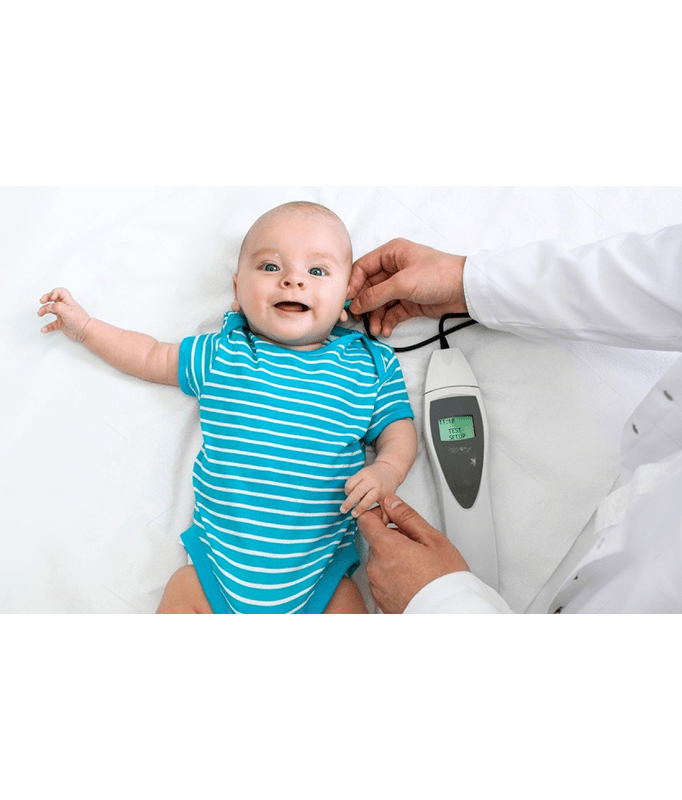
OAE (Oto acoustic emission)
The unique window provided by otoacoustic emissions (OAEs) is invaluable in audiology for assessing inner ear health. These emissions, sounds generated by the cochlea in response to stimuli, are an effective and non-invasive method of assessing hearing function in newborns and infants who can’t participate in standard hearing tests. OAEs are important because they can detect hearing issues at an early stage, aiding in the prompt identification of hearing loss or auditory system abnormalities. By capturing the cochlea’s response to sound stimuli, OAE testing helps clinicians differentiate between types of hearing loss and determine personalised intervention strategies.
Additionally, OAEs serve as a crucial tool for monitoring hearing health post-treatment, allowing audiologists to track changes and assess the effectiveness of interventions like hearing aids or cochlear implants. They have a role that goes beyond diagnosing. In the end, these emissions are a valuable complement to traditional audiometry, aiding in comprehensive assessments and early intervention, and making a significant impact on auditory health preservation across diverse populations.
When is an OAE Test Recommended?
The Otoacoustic Emission test is a way to see how well the inner ear, which is also called the cochlea, is doing its job. Doctors like to use the Otoacoustic Emission test when they are checking the hearing of babies to make sure they can hear okay. They also use the Otoacoustic Emission test on kids who are having a time speaking and on adults who are having trouble hearing things.
The Otoacoustic Emission test is very quick. It does not hurt at all. The Otoacoustic Emission test helps the people who check hearing these people are called audiologists. They often work at a hearing care clinic. The audiologists use the Otoacoustic Emission test to find out if someone is losing their hearing and to keep track of the health of the cochlea.
The Otoacoustic Emission test is really good for checking the hearing of babies for checking how well the cochlea is working and for making sure the inner ear is working the way it should be. The Otoacoustic Emission test is very helpful, for all these things.
Benefits of OAE Hearing Test
The OAE hearing test is widely used because it is simple and reliable. Some key benefits include:
- Quick and painless procedure
- Ideal for newborns and young children
- Helps detect early hearing loss
- Provides accurate screening of inner ear function
Who Should Take an OAE Test?
An OAE test may be recommended for:
- Newborn babies for early hearing screening
- Children with speech or language delay
- Adults experiencing hearing loss or tinnitus
- People exposed to loud noise environments
Early hearing screening helps identify hearing problems at an early stage and ensures timely treatment.
Appointment
Get Amazing Treatment For our Specialist
An OAE test measures the response of the cochlea to sound and helps assess inner-ear function.
Yes. OAE is widely used for newborn and infant hearing screening because it does not require active responses from the child.
No. OAE testing is quick, safe, and painless.
It may be recommended for newborns, children with speech or language delays, and people with suspected hearing problems.