
Can you think of a world without any sounds? Well, it is quite boring. Such a condition is because of hearing loss. Hearing loss is a medical condition, leading to the inability to hear sounds. It affects 5% of the world’s population. To overcome hearing problems, it is advised to use hearing aids. Also read pros and cons of rechargeable hearing aid batteries before deciding to use one.
The evolution of hearing aids from disposable zinc-air batteries to rechargeable Lithium-ion technology has made them more convenient. These are sustainable and longer lasting than battery models. The revolution started with Li-ion technology. The batteries will offer day-long battery life, fast charging, and will be able to last for several years.
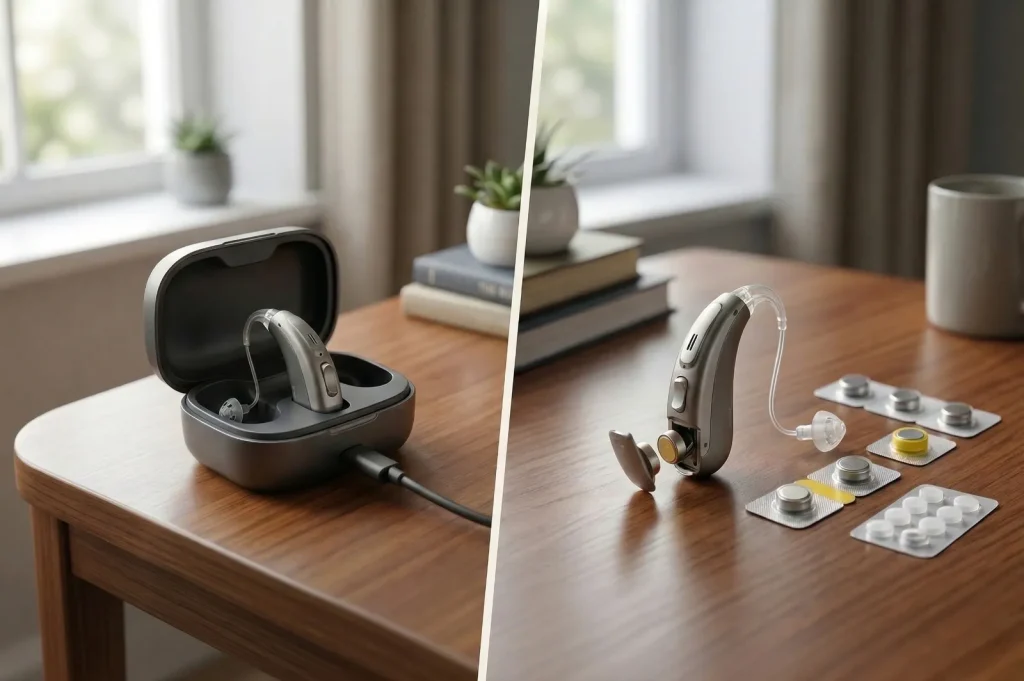
Understanding Hearing Aids and How They Work
Hearing aids are electronic devices meant for amplification of sound. Whether you choose to use the best hearing aids in the world or common ones, there are always three main components.
- Microphone (captures sound)
- Amplifier (increases sound strength)
- Speaker (delivers sound into the ear)
Even though these components are important, performance, convenience, and long-term usage depends on the power source. That’s why the debate around rechargeable hearing aids vs battery has become quite significant.
What are Rechargeable Hearing Aids?
Rechargeable hearing aids use built-in lithium-ion batteries. These batteries can be charged and work like those in your smartphone. They are part of the latest digital hearing aids trend, designed for convenience and ease.
You can charge them using:
- Charging docks
- Portable charging cases
Benefits of Rechargeable Hearing Aids
- No need to replace tiny batteries
- Extremely convenient for daily use
- Eco-friendly option with less waste
- Widely preferred among modern users
These features make them one of the best hearing aids choices for people looking for simplicity.
Limitations of Rechargeable Hearing Aids
- Requires consistent charging routine
- Higher initial investment
- Battery may need replacement after 3–5 years
What are Battery-Powered Hearing Aids?
Traditional hearing aids work on zinc-air batteries. They are especially useful in hearing aids for seniors and are used widely because of flexibility.
Benefits of Battery Hearing Aids
- Batteries are easily available anywhere
- No dependency on charging
- Ideal for long travel or extended outdoor use
Limitations of Battery Hearing Aids
- Continuous cost of replacing batteries
- Frequent battery changes required
- Less environmentally friendly
Which is Better Hearing Aid with Battery or Rechargeable?
The answer to this question completely depends on you and your lifestyle.
Seniors: Even though seniors usually use battery powered hearing aids, many among them prefer rechargeable because of the easy use.
Frequent Travelers: The most dependable option is to opt for a battery-operated hearing aid, as there is no need to handle batteries.
Working Professionals: The most convenient option is to choose a rechargeable hearing aid, as it is more convenient.
When considering which is better hearing aid with battery or rechargeable, cost factors also come into play. Rechargeable hearing aids cost more but will save you money over time. Battery models are cheaper when compared to the other, but cost you money for changing batteries.
How to Choose the Best Hearing Aids for Your Needs?
Choosing the best one is not about hearing aid technology; it is about your life. Consider:
- Degree of hearing loss
- Lifestyle and daily routine
- Budget and long-term cost
- Ease of handling and maintenance
Consider these tips to choose the right hearing aid. Seeking advice from a professional can help you find the right one.
How Long Do Rechargeable Hearing Aids Last?
A fully charged battery of the hearing aid can last 18–30 hours per charge (depending on usage).
The battery itself usually lasts 3–5 years before replacement.
The factors that affect the battery life include streaming time, volume settings, and environmental conditions. Despite these factors, they are chosen over battery hearing aids.
Are Battery Hearing Aids Cheaper than Rechargeable Ones?
Yes, battery-powered hearing aids have lower upfront cost. However battery replacements that happen in the future will result in expenses.
So even though they seem budget friendly initially, it won’t be the case in the future, when comparing which is better hearing aid with battery or rechargeable.
Can You Switch from Battery to Rechargeable Hearing Aids?
Yes, of course. Many modern invisible hearing aids and modern ones offer the option to be rechargeable. However, before switching:
- Check device compatibility
- Consult a hearing specialist
The choice to go for the rechargeable hearing aids vs battery will depend on your requirements. While both have their advantages, the idea is to get the best hearing aids that can easily be incorporated in your life.
If you are still not sure about whether to opt for either rechargeable or battery-powered hearing aids, then just look into your lifestyle.
You should take your time to explore all your options and don’t be afraid to visit the nearby hearing aid centre, as good hearing is not just about the hearing aid but about making your life better every single day.