
A hearing test is conducted to measure your hearing health. Hearing health is the condition of your ears and the auditory system. Testing it at an early age helps you detect gradual hearing loss. Newborns, children, older adults and anyone who feels difficulty in hearing should undergo a hearing test. If you ask people to repeat during conversations, struggle to hear in noisy places, or have trouble during phone conversations, you need to take a hearing evaluation process.
Who needs hearing test?
- Adults have trouble hearing conversations or sounds
- Children with speech delays or learning difficulties
- Seniors who have an age-related hearing loss
- People experiencing tinnitus, dizziness, or frequent ear infections
- Individuals regularly exposed to loud noise at work or in daily life
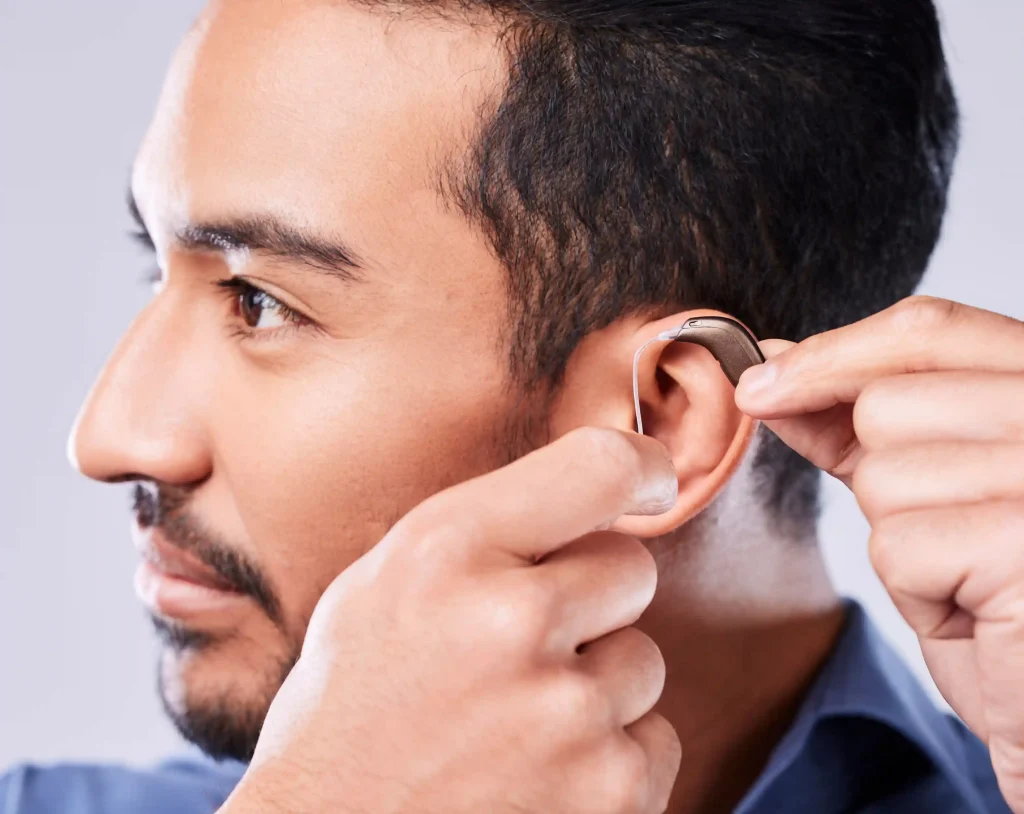
How long does a hearing test take?
A hearing test procedure usually takes 20–30 minutes, but it can also go up to one hour. The duration of the test can varied based on several factors such as the type of test, age & condition and discussion time. The test involves a series of simple listening and response activities conducted in a controlled environment. It is completely pain-free, non-invasive, and safe, ensuring a comfortable experience for both adults and children.
Step-by-Step Process: What happens during a hearing test?
Step 1: Hearing & Medical History Review
The hearing test steps begin with a brief discussion about your hearing and medical background. This includes your lifestyle, daily noise exposure (such as work or headphone use), and any symptoms you may be experiencing like hearing difficulty, ringing in the ears, or dizziness. Your audiologist will also ask about past ear conditions, infections, injuries, or surgeries during your hearing test consultation. This helps them understand your hearing health and conduct the test accordingly.
Step 2: Visual Ear Examination (Otoscopy)
The audiologist examines your ear canal and eardrum using a small lighted instrument. This helps identify issues such as earwax buildup, infection, or abnormalities that could affect hearing. This step is important to ensure the ears are clear and safe before proceeding with further hearing tests.
Step 3: Tympanometry Test (Middle Ear Assessment)
Tympanometry evaluates how well the middle ear is functioning by gently changing the air pressure in the ear canal. It helps detect fluid behind the eardrum, pressure imbalances, or problems with the eardrum’s movement. This test is usually recommended if there are issues with the middle ear or if there is a history of ear infections.
Step 4: Pure Tone Audiometry Test
You will wear headphones and listen to a series of tones at different frequencies and volume levels. Each time you hear a sound, you respond by raising your hand or pressing a button. This test measures the softest sounds you can hear and helps determine your hearing threshold.
Step 5: Speech Audiometry Test
This test assesses how well you understand and recognize spoken words. You will be asked to repeat words at various volume levels to evaluate speech clarity and word recognition. It is important because it reflects how you hear and understand speech in everyday situations.
Step 6: Additional Hearing Tests (If required)
Depending on the findings, additional tests may be recommended. These can include OAE (Otoacoustic Emission) tests to assess inner ear function, BERA/ABR tests to evaluate the hearing nerve and brain pathways, and specialized tests for children or infants who cannot respond verbally.
Understanding your Hearing Test Results
After your hearing test, the audiologist will explain your audiogram, which is a chart that shows how well you hear different sounds and frequencies. It helps identify which sounds are difficult for you to hear and which ear.
Your results may indicate the type of hearing loss you have:
Conductive hearing loss – caused by issues in the outer or middle ear, such as earwax buildup, fluid, or infection.
Sensorineural hearing loss – related to damage to the inner ear or hearing nerve, often due to aging or noise exposure.
Mixed hearing loss – a combination of conductive and sensorineural loss.
The hearing test procedure also shows the degree of hearing loss, ranging from mild, moderate, severe, to profound. This helps determine the most suitable treatment or hearing solution for your needs.
What happens after the hearing test?
After the hearing evaluation process, the doctor or audiologist will discuss the results in detail and provide personalized recommendations based on your hearing needs. If hearing loss is detected, they may suggest hearing aids or assistive devices suited to your lifestyle and level of hearing loss. In cases where a medical condition is suspected, you may be referred to an ENT specialist for further evaluation or treatment. A follow-up and monitoring plan is often advised to track changes in your hearing and ensure long-term hearing health.
Is a hearing test painful or risky?
The hearing test procedure is completely painless and involves no discomfort. They are safe for all age groups, including children, adults, and seniors. The procedure is non-invasive and carries no risks or side effects, making it a simple way to check your hearing health.
Hearing tests for children vs adults
Hearing tests for children are friendly and engaging, using methods that match their age and attention level. Techniques like play audiometry turn responses into fun activities, making testing comfortable and accurate for young children. Early hearing screening is crucial, as it helps identify hearing issues at a young age, supporting proper speech, language, and learning development.
How often should you get a hearing test?
Adults under 50 with no hearing concerns should consider a hearing test every 2–3 years as a preventive check. Seniors are advised to have their hearing tested once a year, as age-related hearing loss can progress gradually. People with existing hearing loss should follow the regular testing schedule recommended by their audiologist to monitor changes and adjust treatment if needed. Those working in noisy environments should undergo hearing tests annually to detect early damage and protect their hearing health.